
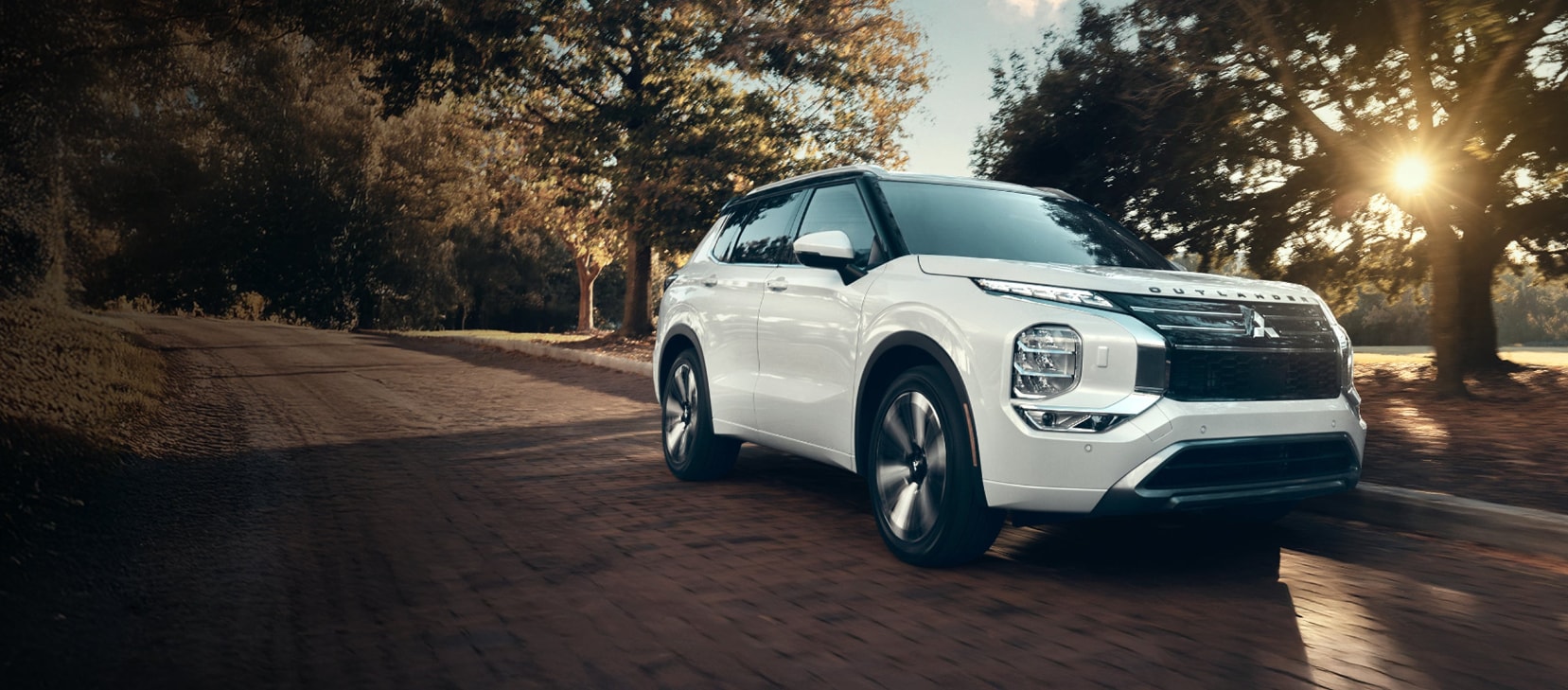
Fuel economy rarely makes headlines when you're shopping for a three-row SUV. Most buyers just assume the extra row of seats means paying more at the pump. The 2026 Mitsubishi Outlander pushes back against that assumption pretty directly, pairing a genuinely spacious, family-ready interior with some of the strongest efficiency numbers in its class. At Boardman Mitsubishi, we work with a lot of Boardman and Youngstown families who are surprised to learn just how much this vehicle delivers on both fronts. If you've been comparing three-row SUVs and want to understand the full fuel economy story before making a decision, browse our current Outlander inventory and keep reading. The numbers are worth your attention.
Why the 2026 Mitsubishi Outlander Is the Most Fuel-Efficient 3-Row SUV You Can Buy
The compact SUV segment is crowded, but true three-row options that seat seven without wrecking your fuel budget are surprisingly rare. Most three-row SUVs are either full-size or mid-size vehicles pushing toward the 20 MPG range on a good day. The Outlander sits in a smarter middle ground: a compact footprint that keeps weight in check, combined with a mild-hybrid powertrain that does real efficiency work rather than just earning a marketing badge.
What makes the 2026 Outlander particularly compelling from a fuel standpoint is how it uses electrification without asking buyers to pay a significant premium or change their daily routine. Mitsubishi rethought the engine architecture and added a 48-volt mild-hybrid system that meaningfully cuts fuel consumption across everyday driving conditions. For families who want three rows of seating and 64.3 cubic feet of maximum cargo space without dreading every fill-up, this powertrain is a genuine differentiator.
Inside the 1.5L Turbocharged 48-Volt Mild-Hybrid System
The engine here is a 1.5-liter turbocharged inline-four DOHC with variable valve timing and direct injection. On paper, that sounds modest for a three-row SUV. In practice, turbocharging combined with mild-hybrid support delivers 174 hp at 6,000 rpm and 206 lb-ft of torque at 3,600 rpm. That's more than enough for daily driving, highway merges, and hauling a full passenger load.
The 48-volt mild-hybrid system is where things get genuinely interesting. A belt-driven starter-generator and a 48V lithium-ion battery work together to capture kinetic energy during deceleration and braking, energy that would otherwise be lost as heat. That stored energy then provides electric assist to the engine below approximately 4,300 RPM, reducing combustion demand precisely when it would normally burn the most fuel. Auto Start/Stop handles engine shutoff at idle situations like red lights and stop-and-go traffic, restarting seamlessly when you're ready to move.
Unlike a full hybrid or plug-in setup, the 48-volt architecture requires no external charging, no range anxiety, and no changes to your daily routine. You simply drive, and the system handles everything quietly in the background. That simplicity makes this approach approachable for buyers who want real efficiency gains without managing a plug-in system.
Worth noting: Mitsubishi also offers a separate Outlander PHEV model with its own distinct powertrain, up to 38 miles of EV range, and 64 MPGe. That's a different vehicle with different specs. If it interests you, we're happy to walk you through it separately.
2026 Mitsubishi Outlander Fuel Economy Specs: FWD vs. AWD Ratings
To understand the 2026 Outlander's fuel economy, you need to look at both available drivetrain configurations. Mitsubishi offers the Outlander in front-wheel drive and all-wheel drive, and the numbers differ modestly between the two.
| Drivetrain | City MPG | Highway MPG | Combined MPG |
|---|---|---|---|
| FWD | 26 | 31 | 28 |
| AWD | 26 | 30 | 27 |
The Outlander runs on regular unleaded fuel and carries a 14.5-gallon tank. One standout detail: all trims, ES, LE, SE, SEL, Trail Edition, Ralliart, and Black Edition, share identical fuel economy ratings. Whether you're in the base trim or the performance-oriented Ralliart, you're not trading efficiency for features.
FWD Fuel Economy
The front-wheel-drive configuration achieves an EPA-estimated 26 MPG city, 31 MPG highway, and 28 MPG combined. Those highway numbers are particularly strong for a vehicle that seats up to seven. For buyers whose driving skews highway-heavy, the FWD Outlander delivers impressive range per tank without sacrificing passenger capacity.
AWD Fuel Economy
The AWD configuration comes in at 26 MPG city, 30 MPG highway, and 27 MPG combined. The efficiency trade-off for adding all-wheel drive is just one MPG on the highway, a small price for drivers who need confident traction through Ohio winters. The S-AWC (Super All-Wheel Control) system actively monitors torque distribution to optimize grip across varying surface conditions, adding real driving confidence without a serious hit to fuel economy.
What These MPG Numbers Mean for Boardman and Youngstown Commuters
Numbers on a spec sheet mean a lot more when you translate them into actual dollars. For drivers commuting daily around Boardman, Youngstown, or into Cleveland, a roughly 90-mile trip one-way, the 2026 Outlander's efficiency has a direct and meaningful impact on monthly and annual fuel spending.
Here's how we frame it for our customers. At 15,000 miles per year and $3.50 per gallon, the FWD Outlander's 28 MPG combined rating works out to roughly 536 gallons and approximately $1,876 in annual fuel costs. A comparable three-row SUV rated at 22 MPG combined would consume around 682 gallons, roughly $2,387 per year. That's an estimated $511 in annual savings, or approximately $2,555 over five years of ownership. These are illustrative estimates based on current fuel prices, but the direction is clear: the efficiency advantage compounds meaningfully over time.
Ohio winters factor into this calculation too. The AWD configuration, despite its slight efficiency trade-off, gives Boardman-area drivers the traction they need on snow-covered roads without fuel costs ballooning through the colder months. That balance of seasonal confidence and daily efficiency is hard to find elsewhere in the three-row segment.
If you'd like to run the numbers against your current vehicle or specific commute, contact our team and we'll walk you through a personalized comparison.
2026 Outlander Fuel Economy vs. Rival 3-Row SUVs
Shopping for a three-row compact SUV means putting the Outlander up against a short list of real competitors. When you stack the 2026 Outlander's fuel economy specs against comparable gas-powered and mild-hybrid rivals, the picture comes into focus quickly.
| Model | City / Hwy / Combined MPG |
|---|---|
| 2026 Mitsubishi Outlander (AWD) | 26 / 30 / 27 |
| Toyota Highlander (gas turbo AWD) | 21 / 28 / 24 |
| Honda Pilot | 19 / 27 / 22 |
| Kia Sorento | 23 / 31 / 26 |
| Hyundai Santa Fe | 20 / 29 / 24 |
| Nissan Pathfinder | 20 / 27 / 23 |
The Outlander leads the class at 27 MPG combined in AWD. The Kia Sorento comes closest at 26 MPG combined, while the Toyota Highlander, Honda Pilot, Hyundai Santa Fe, and Nissan Pathfinder all trail by 3 to 5 MPG combined. Note that this comparison reflects standard gas and mild-hybrid powertrains. Dedicated full-hybrid variants like the Toyota Highlander Hybrid represent a separate comparison category with their own pricing and powertrain trade-offs.
The Outlander differentiates itself not just on MPG, but on what comes with it: three-row seating for up to seven passengers, 2,000 lbs of towing capacity with the factory tow package, and Mitsubishi's 10-year/100,000-mile powertrain warranty. All standard.
Total Cost of Ownership: How Fuel Savings Add Up Over Time
When customers focus only on the sticker price, they often underestimate how much powertrain efficiency contributes to the actual cost of owning a vehicle. The 2026 Outlander's mild-hybrid system changes that math.
Maintenance and Long-Term Reliability
The 48-volt MHEV system is designed to be low-maintenance. It requires no plug-in charging infrastructure, and the 48V battery integrates with the standard vehicle electrical architecture rather than adding meaningful service complexity. Regenerative braking also reduces wear on the physical brake components over time, which can translate to lower maintenance costs compared to conventional brake systems. That simplicity keeps ongoing costs lower than full hybrid systems, while still delivering real fuel savings on every tank.
Warranty Coverage
Mitsubishi backs the 2026 Outlander with a 10-year/100,000-mile powertrain limited warranty, one of the strongest coverage commitments in the segment. For Boardman and Youngstown buyers thinking about five-year ownership and beyond, that warranty is a meaningful part of the total value equation. The efficiency advantage isn't just about today's gas prices. It's about confidence in a vehicle built to deliver dependable performance over the long haul without unexpected repair bills eroding your savings.
Frequently Asked Questions About 2026 Outlander Fuel Economy
How does the 2026 Outlander compare to other fuel-efficient SUVs?
Among gas-powered and mild-hybrid three-row SUVs, the 2026 Outlander leads its class. At 27 MPG combined in AWD, it outpaces the Toyota Highlander (24 MPG combined), Honda Pilot (22 MPG combined), Hyundai Santa Fe (24 MPG combined), and Nissan Pathfinder (23 MPG combined). The Kia Sorento is the closest competitor at 26 MPG combined. The Outlander delivers that lead alongside seven-passenger seating and a 10-year/100,000-mile powertrain warranty, a combination rivals don't easily match.
Is the mild-hybrid system better for city or highway driving?
The 48-volt MHEV system provides the most benefit in city and stop-and-go driving, where regenerative braking has more opportunity to capture energy and Auto Start/Stop reduces idle fuel consumption. The electric assist below approximately 4,300 RPM also helps during urban acceleration. On the highway, the turbocharged engine runs efficiently on its own, which is why the FWD model achieves a strong 31 MPG highway. Drivers who split their time between city streets and open roads benefit from the system across both environments.
Browse Boardman Mitsubishi's Efficient Inventory and Calculate Your Fuel Savings
Why the 2026 Outlander Makes Sense for Our Customers
The case for the 2026 Outlander is straightforward. Seven-passenger space, class-leading fuel economy, 2,000 lbs of towing capacity, and a 10-year/100,000-mile powertrain warranty, all built around a mild-hybrid system that requires nothing extra from you. For Boardman and Youngstown families who commute regularly, haul gear, and want to keep fuel costs in check through Ohio winters, this SUV covers the bases without asking for compromises.
Take the Next Step
We carry the 2026 Outlander across multiple trim levels in both FWD and AWD configurations. Our team can walk you through the efficiency difference between drivetrains, compare the mild-hybrid Outlander to the Outlander PHEV, and help you run the numbers against your current vehicle. Explore our inventory online or stop by our Boardman location to schedule a test drive and experience the mild-hybrid powertrain for yourself.